
megan stroech
MFA Printmaking ’12
Comfort, Risk, and Everything in Between
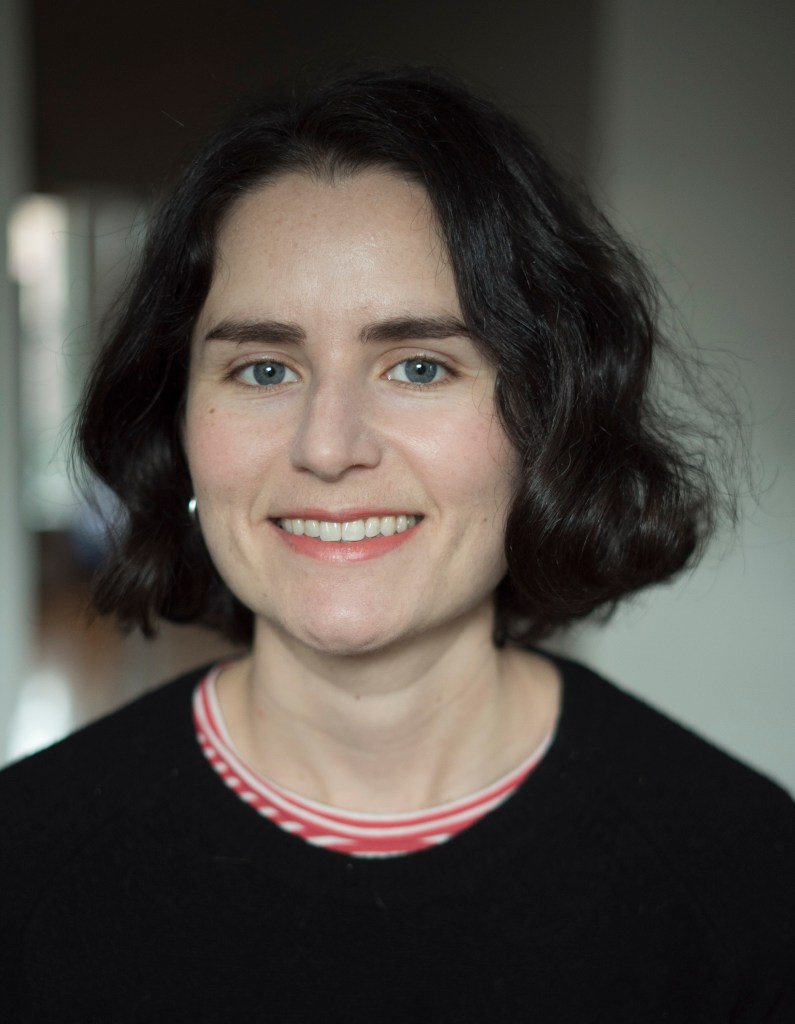
Megan Stroech’s creative path has never been about taking the obvious route. From growing up in a crafty household in Texas to finding herself in the heart of the New York art world, her journey has been full of pivots, persistence, and a whole lot of mixed media magic. In our conversation, Megan broke down the realities of building an art career, the unexpected skills that have kept her afloat, and the ever-evolving balance between making work and making a living.
Origins in Making
For Megan, creativity was always part of the fabric of her life. Her mom was deeply into craft fairs, summer projects were a regular thing, and as an only child, she was always finding ways to keep herself busy. Art was never a question—it was just there. Her aunt was a painter, and Megan remembers art being broadly embraced in her family.
“I was always making things in my room, taking art camps, and just naturally drawn to it. When it came time to apply for college, art was the only thing that made sense,” she explains.
She landed at the University of Texas in Austin, where a bit of luck (and some closed class options) led her to printmaking. It was the sense of community in the print shop that solidified her love for the medium. From there, a professor pointed her toward Illinois State University’s well-funded MFA program, and despite the shock of trading Texas for a small Midwest town, she made the leap.
Starting Over—Again and Again
Post-MFA life came with a reality check. While grad school provided structure, moving to Chicago meant starting from scratch. Megan patched together retail gigs, artist residencies, and part-time work to stay connected to her practice. “Nobody tells you that once you leave school, you’re back at square one,” she says. “You’re unknown, and you have to keep proving yourself.”
But she hustled. A residency at Anderson Ranch in Colorado gave her a fresh start, and from there, she found her way into Chicago’s art scene, landing a studio, a part-time role at Columbia College, and private teaching gigs at places like Spudnik Press. She built an artist network around her with intention. Megan also participated in the HATCH Residency through the Chicago Artists Coalition, which led to her first gallery collaboration.
Chicago became a creative home, but after five years, a mix of personal and professional shifts led her to New York City, where she secured a job at Parsons School of Design. Now, nearly eight years later, she’s the manager of the school’s print studios and an instructor—proof that while the artist path may be unpredictable, it’s also full of unexpected opportunities.
At Parsons, she oversees operations and programs in the printmaking studio, balancing logistical management with technical support for students. The program itself is robust, encouraging a lot of experimentation with materials and formats. Her role allows her to stay immersed in process while mentoring young artists through both their technical and conceptual challenges.
The Art Itself: Layered, Found, and Evolving
Megan’s work has evolved from her ISU days, when she played with jello mold imagery and cut-paper paintings, into a practice that incorporates found objects, screen printing on fabric, and larger-scale mixed media pieces. Her fascination with household aesthetics—faux finishes, textiles, and the high-low contrast of mass-produced decor—continues to inform her work. eBay is now a research tool, where she hunts down fabrics and trends to integrate into her pieces.
Lately, she’s been working on structuring her pieces differently, experimenting with stretching canvases and rethinking how her work is installed. “I once had to install a show in L.A. where every piece had to be individually mounted. It was a nightmare,” she laughs. “I learned my lesson: make your work easy to install.”
Lessons in the Art World
Megan doesn’t hold back when talking about the realities of the art world. One major misconception? That artists are disorganized or unprofessional. “You have to have your shit together,” she says. “You have to know how to talk about your work, write about your work, and advocate for yourself.”
She also wishes there was more transparency around how artists get opportunities. “There’s a lot of secrecy—people don’t always share deadlines for applications or how they got certain shows. And in New York, a lot of artists don’t talk about how they afford to be here,” which often comes down to financial support from family.
Megan talked about one of the hard lessons she learned firsthand with a gallerist from Berlin. She described how, early on, the opportunity to exhibit abroad was thrilling. She dropped everything to travel to Berlin for a show, eventually gaining representation. “It gave me visibility and experiences I never could have orchestrated on my own,” she says. But over time, the relationship soured. She wasn’t being treated professionally, and the push and pull of staying for the exposure versus leaving for her own self-respect was difficult. In the end, she chose to walk away.
Resilience, Risk, and Redefining Success
Megan Stroech’s story isn’t about “making it” once and for all. It’s about making it work—again and again. It’s about building a career out of patchwork and persistence, adapting to what’s available, and learning to find security not in titles or outcomes, but in the ability to keep creating.
After years of pushing for new job opportunities, Megan is shifting her focus back to the studio. “For a while, I was so caught up in trying to find the next thing that my studio practice suffered. Now, I’m making work because I love it, and I trust that things will fall into place.”
She’s currently exploring the idea of a dinner table-inspired piece, playing with the aesthetics of place settings and the strange specificity of utensils designed for hyper-specialized purposes. “It’s an idea I keep coming back to, but I haven’t cracked the code yet,” she says.
Through all the shifts, Megan’s definition of success has changed. “It’s not about getting a specific show or job. It’s about feeling excited to be in the studio, discovering new things, and staying engaged with my work. If I can do that, I’m doing something right.”
That’s the through line in her career: a steady refusal to let the art world define her limits. Instead, she’s carved her own path—messy, nonlinear, and deeply her own.
At Normal Roots, we’re here to celebrate exactly that: the real, often unglamorous, but deeply rewarding work of making a creative life after college. Megan’s story is one of grounded ambition—of staying true to your practice, building community from scratch, and trusting that your roots, no matter how unconventional, will hold.
Interview by Kelsey DeGreef for Normal Roots.
 Normal Roots