
Richard Finch
Faculty from 1977-2014
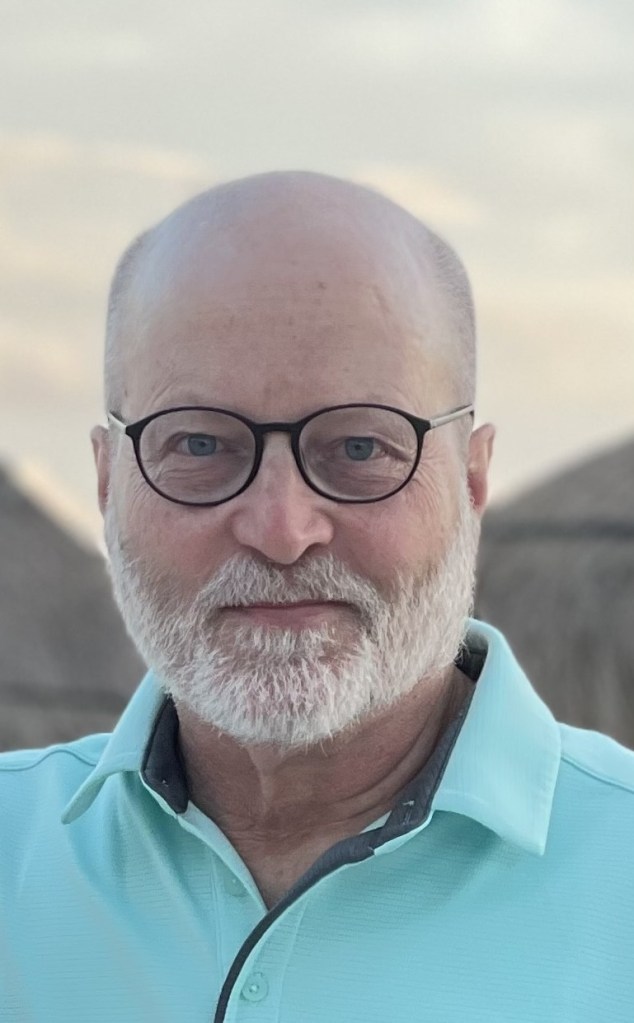
A Life in Art, Teaching, and Persistence
For many artists, the road to finding their creative voice is anything but linear. Richard Finch’s story is no exception. His decades-long career as an artist, educator, and director of ISU’s Normal Editions Workshop is built on a mix of curiosity, perseverance, and a willingness to take risks.
From Uncertain Beginnings to Finding Printmaking
When Richard started his undergraduate studies at SIU Edwardsville, he had no clue what he wanted to do. Like many students, he spent two years floating through general education courses before taking his first drawing class. It wasn’t easy. He made the mistake of starting with Life Drawing—an ambitious move for a beginner—and, in his own words, he was “terrible.” But instead of backing down, he leaned in. That challenge became the turning point that led him to printmaking.
A Teacher’s Assistant in that class nudged him toward trying intaglio printmaking, and from there, Richard was hooked. He explored lithography, experimented with different materials, and fell in love with the technical, hands-on nature of the process. A pivotal moment came when ISU’s Ray George visited SIU for a summer course. The two collaborated on a lithograph, marking Richard’s first experience with collaborative printmaking—something that would shape his career in the years to come.
The Leap from Student to Educator
Richard’s path to teaching wasn’t planned. While in graduate school at SIU, he was given the chance to teach an intaglio class one summer. He quickly realized he loved it. After earning his MFA, he had a few job offers—one at the prestigious Tamarind Institute, a part-time gig at Kansas City Art Institute, and a full-time tenure-track role at LSU. The financial security of LSU won out, but he and his wife, Diana, never quite felt at home there.
Then came another risk. While attending a print symposium in Des Moines, Richard reconnected with Jim Butler, who mentioned an opening at ISU. It wasn’t a stable position—funded by a grant with no guarantee of long-term employment—but Richard jumped at the opportunity. For years, his job at ISU shifted between part-time civil service, temporary contracts, and teaching roles. It wasn’t until nearly a decade later that he secured a tenure-track position. “It seemed like the bar kept going up as I got closer,” he recalled. But he pushed forward because it was exactly the kind of work he wanted to do—teaching, making prints, and collaborating with artists.
Life After the Classroom
After nearly 40 years at ISU, Richard retired in 2014. But stepping away from academia didn’t mean stepping away from art. His studio practice remains active, now focused on drawing and painting instead of printmaking. He’s working on a book that compiles 12 mixed-media pieces, each representing a different month of the year. And despite selling his printing equipment years ago, he’s feeling the itch to return to printmaking through stenciling techniques.
Richard also stays involved in the local arts community, regularly showing at the McLean County Arts Center and supporting exhibitions. He even spent three years on the Exhibition Selection Committee, which reconnected him with the broader art world post-retirement. Engaging with other artists and remaining active in the arts community has helped him maintain his creative drive, even outside of academia.
One of the biggest changes after stepping away from the classroom? Freedom. Richard no longer has to fit his creative work around meetings, grading, or structured time in the studio. “I can come and go as I please,” he said. Without deadlines dictating his output, he’s found more space to experiment—sometimes failing, sometimes succeeding, but always exploring. “I can try something that absolutely fails, and it’s okay,” he added. “I don’t have to straighten it up for a critique. I can just figure it out and do it better next time.”
Despite the freedom, Richard admits he misses aspects of teaching—mainly the energy of being around students, seeing their growth, and having those in-depth conversations about art. But his post-teaching life has allowed him to dive into his own work in ways that weren’t possible before.
The Class He’d Teach Again
If given the chance to step back into the classroom for just one day, Richard wouldn’t hesitate—he’d teach Advanced Life Drawing. It was a course he developed himself, and one that he found particularly rewarding. “It gave me a chance to delve more into the structure and anatomy of the human figure, and also into content issues,” he explained. He loved seeing students move beyond technical mastery to experiment with gesture, composition, and conceptual depth.
He was also surprised that many of his colleagues didn’t want to teach Life Drawing, which made it even more meaningful for him to continue offering it. “I didn’t mind,” he said. “It was something I really enjoyed.”
What Students Should Take Advantage Of
Looking back, Richard believes students should make better use of the resources available to them. Specifically, he encourages students to take full advantage of the diversity of the faculty. “Just because certain professors teach certain classes doesn’t mean you can’t reach out to them,” he said. He wishes more students had scheduled studio visits with different faculty members or sought out critiques from instructors outside of their primary discipline.
Beyond that, he emphasized attending exhibitions, guest lectures, and artist talks. During his time at ISU, visiting artists would come in for month-long residencies, working alongside students and offering insight into professional practice. “Those opportunities are there, but students have to take the initiative to engage with them,” he said.
Advice for Artists and Former Students
When asked about the biggest challenge young artists face today, Richard points to something timeless: “Finding your own voice.” Trends change, job markets shift, but the struggle to develop a distinct artistic identity remains constant. His advice? Research, absorb influences carefully, and then reach a point where you trust your own instincts.
For alumni who feel disconnected from their artistic practice, Richard emphasizes that it’s okay to reassess. Not everyone who studies art needs to pursue it as a career. He personally made the choice between music and visual art, ultimately deciding he couldn’t do both at the level he wanted. His takeaway: be honest about what excites you, whether it’s in art or another field. The important thing is to stay curious and keep learning.
If Richard could say one thing to all his former students, it would be simple: don’t get discouraged. “There’s a lot of rejection in the art world,” he said. “But that doesn’t mean failure. It just means you’ve found one more way not to do something.” He referenced a quote often attributed to Thomas Edison, who, after inventing the lightbulb, reportedly said he hadn’t failed—he had simply found 1,000 ways that didn’t work. Richard stressed that, above all, artists must be tenacious. “You have to keep pushing forward, even when things don’t go the way you planned. The people who make it are the ones who don’t give up.”
For artists struggling with whether to continue their practice, Richard advises honesty. “It’s okay to pivot,” he said. If making art still fuels them, they should keep at it. If not, it’s okay to shift gears. “Just know what you’re waking up for in the morning,” he added. “Figure out what makes you tick.” Whether sticking with art or moving in a different direction, the key is defining success on your own terms and allowing your creative path to evolve naturally.
Looking Ahead: The Legacy of Teaching and Collaboration
When reflecting on his impact as an educator, Richard hopes his students walked away with a deeper understanding of creativity and critical thinking—skills that extend beyond the studio. He never saw himself as training students for a specific job; instead, he aimed to create an environment where they could explore, experiment, and develop their own artistic voice.
As for faculty and alumni collaborations, he believes these connections shouldn’t be forced through institutional programs but should grow organically. That’s exactly what Normal Roots is doing—building a space where former students and educators can reconnect and support each other, on their own terms.
Richard Finch’s career is proof that art isn’t about a single path—it’s about persistence, adaptation, and finding what drives you. Whether in the classroom, the studio, or retirement, that creative spark never really fades. And for Richard, that’s exactly the point.
Interview by Kelsey DeGreef for Normal Roots.

