
Steven Ciezki
BFA Glass ’12
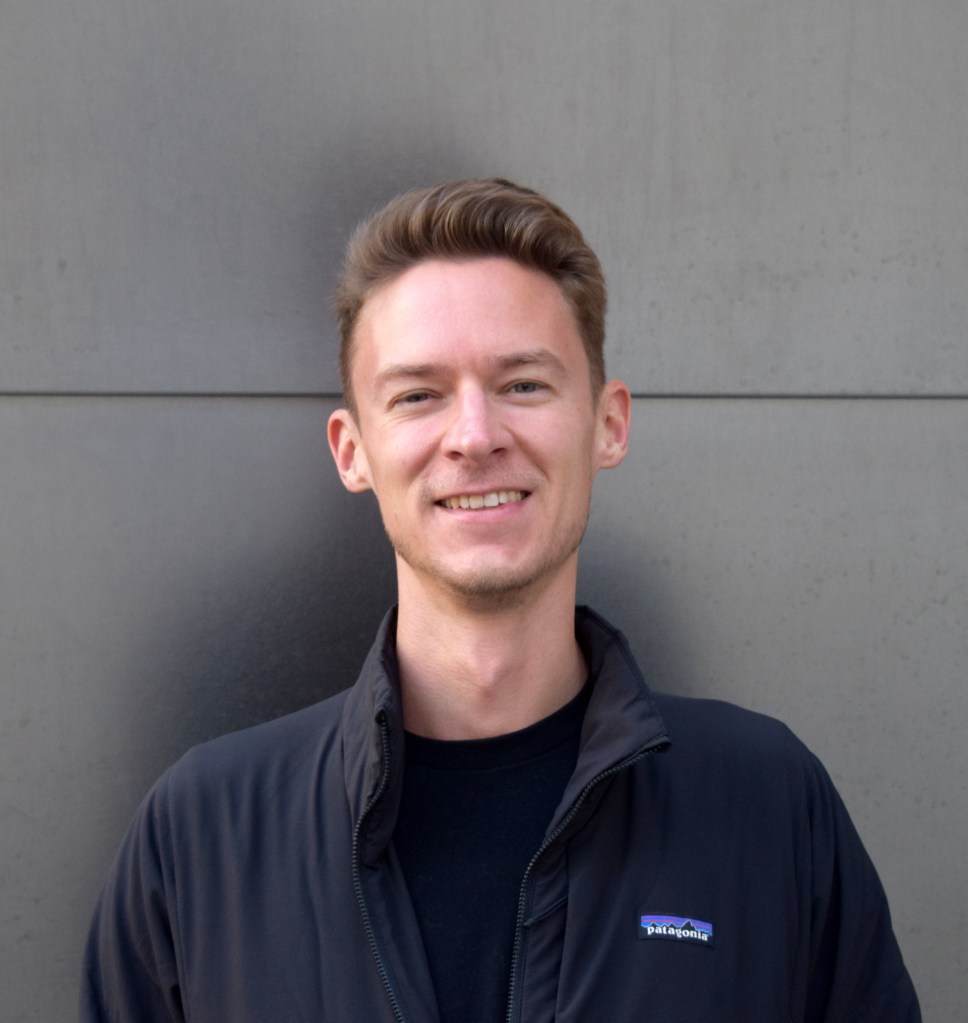
Built From Heat and Habit
When Steve Ciezki saw someone shape molten glass for the first time, he was hooked. The hypnotic rhythm, the precision, the heat—it struck something deep. Years later, that same fascination would drive him across the globe, through teaching studios and gallery shows, book tours and residencies, eventually leading him to design and build a home and studio in Phoenix with his wife. But before all of that, there was a kid who just liked to draw.
A Childhood of Drawing and Discovery
Steve began drawing at age seven, copying cartoons from the newspaper. That early practice grew into a broader love for making: first with pastels and oil paints, then with sculpture. High school introduced him to his first formal art classes, including subtractive sculpting with plaster and stone-like materials. “I couldn’t see the figure in the block,” he laughs, remembering his early attempts. Still, the exposure to both 2D and 3D forms laid a strong foundation.
Encouraged by supportive parents, Steve entered Illinois State University as an art major. He immersed himself in the wide range of courses required of all studio students—drawing, painting, sculpture—each experience helping him build skill and discover new mediums. It was in this process of choosing electives that he stumbled into a glassblowing class.
“Glass gave me something no other material did,” he recalls. “It was like drawing and painting met sculpture, and it finally felt like I was making something truly my own.” But success didn’t come immediately. Steve applied to ISU’s competitive BFA program three times before finally getting accepted. His breakthrough came when he presented a body of work that integrated his drawing skills onto the surface of glass through painting, sandblasting, and layering.
Key to his development at ISU was glass professor John Miller. Miller offered students real-world experience: organizing exhibitions in Chicago, requiring them to pack, ship, install, and even sell their work. “It was my first experience making work for a gallery show,” Steve says. “It was much more real-world than anything I expected from school.”
Another standout experience was a production assignment in the glass program. Students designed a glass product and calculated the full cost of making it—color, shop time, assistant time, packing, and shipping. They then priced it to balance profitability with realism. “That project stuck with me,” Steve says. “Like the gallery show, it helped make the transition after college feel less jarring.”
From ISU to the Real World
After graduating in 2012, Steve immediately immersed himself in the national glass community. He took a class with renowned artist Dante Marioni at Haystack and worked as a studio assistant for John Moran in Pittsburgh. When a fellowship and a potential tech position fell through, he accepted a role at Neusole Glassworks in Cincinnati.
At Neusole, Steve taught public classes in glassblowing and flameworking—but that was only part of the job. “I was also sweeping floors, mopping, cleaning toilets, and maintaining much of the equipment,” he recalls. “Not all of the work was glamorous, but I think I kept the job by showing up on time and working hard.”
While in Cincinnati, Steve’s friend Jason brought him to SOFA Chicago to help set up exhibitions. Steve used the opportunity to network, handing out cards and showcasing his work. The next year, his art was on display. “The second year out of college, I started showing at SOFA. I was like, what the fuck is this? That’s crazy.” For a few years, he managed to support himself by teaching and selling work. Living in a $200-a-month apartment with a collapsing ceiling and black mold in the basement wasn’t good for anyone, but it was enough to keep him going.
Eventually, Steve moved to Phoenix to work more independently at Circle 6 Studios. He traded studio access for helping with equipment repairs, reproductions, and general assistance to other glassmakers. He used his time in the shop to experiment with his own ideas. As sales declined, he pivoted again—writing down his teaching techniques and ultimately producing his first book, Life on the Rails: Intermediate Glassblowing Techniques.
Books, Tours, and Global Connections
Self-published through Amazon, the book achieved a surprising level of success. Steve organized a nationwide tour himself, contacting over 100 glass studios, universities, and programs. “I started reaching out, giving background on myself, who I learned from, images of the book,” he says. He demoed, lectured, and sold books directly.
This DIY momentum led him abroad. He traveled to Belgium for a book release with John Moran and to Turkey for a glass festival. He spent six months in Australia on a fellowship teaching at Canberra Glassworks. While he was there, he was also a visiting artist the Australian National University (ANU) and gave demos at multiple institutions. During this time, he and his now-wife Stephanie, whom he had originally met while working at Circle 6, reconnected. They met up in New Zealand for what they jokingly refer to as their third date.
Back to the Desert, Building Forward
After returning to the U.S., Steve and Stephanie knew they wanted to put down roots. They settled in Phoenix, where they’d originally met, and started the ambitious process of building a combined home and studio. They found land just outside the Coronado Historic District and set their expectations: one year, start to finish. “It ended up taking four,” Steve says.
Delays from permitting, pandemic disruptions, and five temporary rentals made the process feel endless. But even while juggling construction logistics, Steve kept up with his practice. He accepted a residency in Denver and continued teaching, making use of any space available to keep creating. Before moving back to Phoenix, the couple spent some time on the west coast in Carlsbad, CA. Steve rented space at a new studio called Barrio Glassworks and was able to show in their gallery. While based in Carlsbad, he landed a major commission through his Chicago gallery: three life-size glass stacks.
When the new space was finally complete, it wasn’t just a structure—it was the next phase of their life. Stephanie, a tech professional and hobbyist glassblower, became a creative partner as well, contributing to pattern, color, and collaborative design. Together, they began experimenting with new approaches, from laser etching to enamel bonding to combining glass with drawing and painting.
Finding His Center
Now settled in a space they built themselves, Steve continues to push his creative and technical boundaries. And while he’s not one to spill too many details, there might just be another book in the works—one that promises to build on his legacy of sharing knowledge with glass artists everywhere.
Steve’s definition of success has evolved. “At first, it was about making and selling work. Now, it’s more about exploration—mixed media, new surfaces, collaboration. Whether it sells or not, I don’t care. I’m making it.”
Advice for Emerging Artists
Reflecting on the challenges of an art career, Steve doesn’t sugarcoat it. “The highs are really high and the lows are really low,” he says. One of the biggest lessons he’s learned is to expect rejection. “You apply to so many things and get accepted to so few. That’s something not a lot of people talk about.”
His advice to students? Keep applying anyway—and then forget about it until you hear back. Rejection is part of the process. So is uncertainty. Steve has always tried to keep multiple paths open: “I always had a Plan A, B, and C,” he says. “And I just hoped that if I worked hard, opportunities would show up.”
He also emphasizes the importance of finding a creative community after graduation. “The relationships made in school are a great jumping off point, but now you have a much broader world to consider. Find a healthy art community you can be part of.”
Steve Ciezki’s story is not one of overnight success, but of years of steady, hands-on work—of saying yes to opportunity, yes to unglamorous labor, yes to the long game. His journey reminds us that building a creative life isn’t about following a perfect path—it’s about staying in motion, showing up, and shaping something out of the heat and habit of everyday effort.
Interview by Kelsey DeGreef for Normal Roots.
 Normal Roots